Why Greek Orthodox Easter in Santorini Should Be on Your Travel Bucket List
Greeks certainly know how to celebrate Easter. In fact, for most Greeks, Easter matters even more than Christmas. Across the country, families maintain centuries-old traditions that bring entire communities together. If you want to experience authentic Greek culture, Easter in Santorini offers one of the most unforgettable celebrations in Greece.
The Beginning of the Easter Season in Greece
The Easter festive period begins 40 days before Easter with the start of Lent. The first day, Clean Monday (Kathara Deutera), marks a national holiday celebrated with outdoor gatherings, kite flying, and delicious fasting food.
On this day, Greek families typically enjoy seafood and vegan dishes, since Lent traditionally excludes meat and dairy. Throughout these 40 days, many Greeks continue to follow a mainly seafood and plant-based diet.
Interestingly, Lent also includes the national celebration of Greek Independence Day on March 25, when fried cod with garlic dip appears on tables all across Greece.
Meanwhile, Greek children may not have a typical spring break, but they do enjoy two weeks of Easter school holidays—one week before and one week after Easter.
Easter Thursday: Flower Traditions and Preparations
If you plan to experience Easter in Santorini, we recommend arriving by Holy Thursday.
On this day, local women gather at their churches to decorate the epitaphios, the symbolic tomb of Christ, with beautiful fresh flowers. They often work late into the night creating intricate floral arrangements.
Therefore, visiting a few churches on Friday morning offers a wonderful opportunity to admire these handmade creations.
Holy Thursday also brings two beloved culinary traditions:
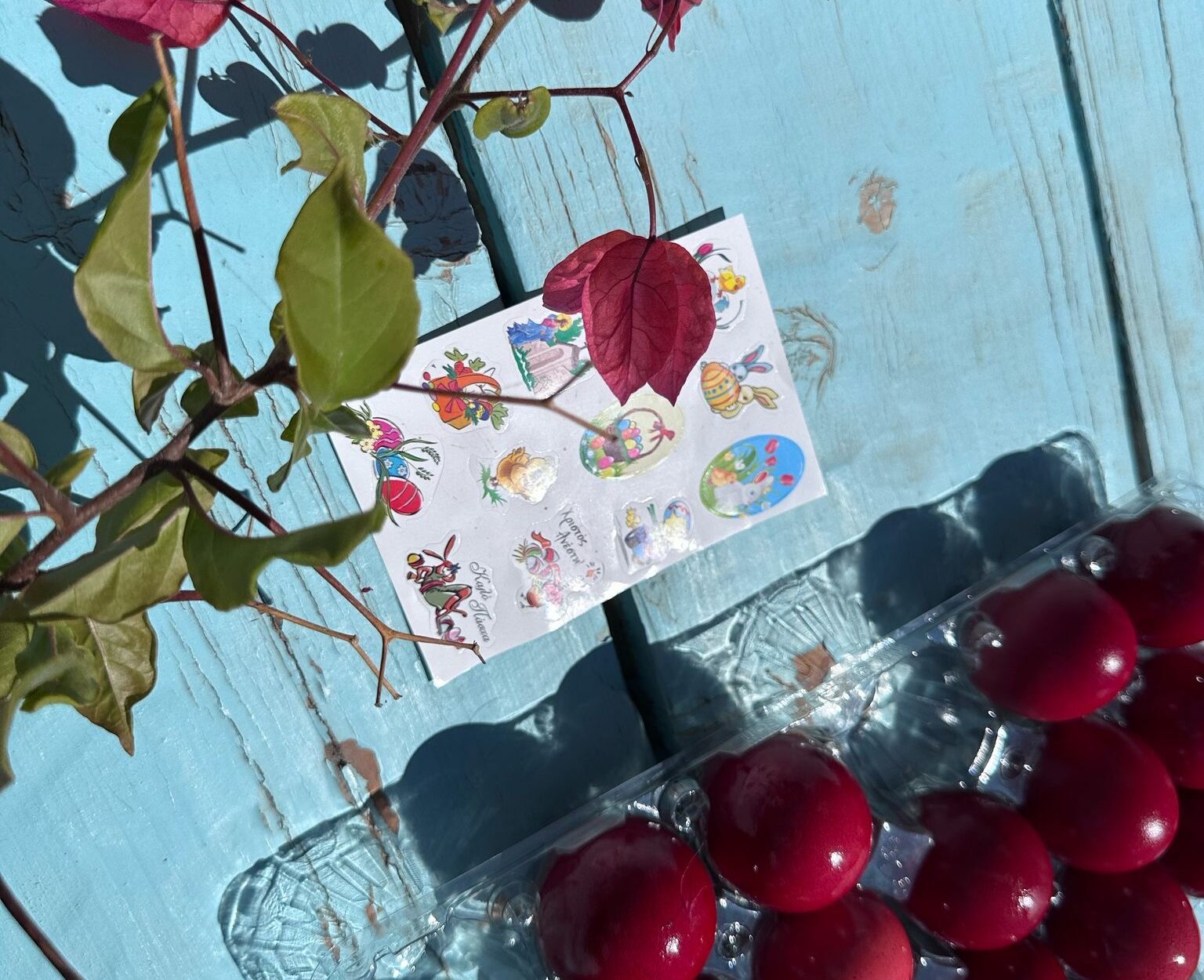
- Dyeing hard-boiled eggs red, symbolizing the blood of Christ
- Baking Tsoureki, the traditional braided sweet bread enjoyed on Easter Sunday
Easter Friday: Santorini’s Most Magical Night
Without a doubt, Good Friday evening becomes one of the most emotional and beautiful moments of Easter in Santorini.
After sunset, each village carries its decorated epitaphios through candle-lit streets in a solemn procession. Thousands of candles illuminate the pathways while church bells ring slowly.
The most spectacular procession takes place in Pyrgos, where locals light thousands of lanterns and torches along the hillsides. As a result, the entire village glows dramatically and the view can be seen from far away.
After the procession, families and friends gather for dinner. However, tradition still forbids meat on this day, so the meal usually includes seafood and fasting dishes.
Easter Saturday: Midnight Celebrations and Fireworks
Holy Saturday marks the pinnacle of the Easter celebration.
Late in the evening, families and friends gather outside churches across Santorini for the midnight resurrection service. Everyone holds a decorated lambada (Easter candle), which symbolizes the light of the Resurrection.
At midnight, the priest announces “Christos Anesti” (“Christ has risen”). Immediately, fireworks fill the sky and people light their candles from the Holy Flame.
During the weeks leading up to Easter, shops in Greece sell beautifully decorated candles. Alternatively, many visitors enjoy decorating their own.
Some villages also maintain the tradition of homemade fireworks created by local young men. Therefore, if you prefer a quieter experience, attending the midnight service in Fira or at Monastery of Prophet Elias provides a calmer atmosphere.
After midnight mass, families break the 40-day fast with a traditional meal that includes Magiritsa soup followed by meat dishes.
Easter Sunday: The Ultimate Greek Celebration
Easter Sunday brings the biggest celebration of all.
In the morning, families play the traditional egg-cracking game using the red-dyed eggs prepared earlier in the week. Afterwards, they enjoy eggs together with slices of tsoureki.
Later, the main event begins: a large Easter lunch. Traditionally, families roast a whole lamb and gather around the table with music, dancing, and plenty of wine.
Restaurants across Santorini also prepare festive menus, so reserving a table at your favorite taverna in advance is highly recommended.
Finally, Easter Monday usually continues the celebration with relaxed family visits and leftover feasts.
What to Wear for Easter in Santorini
Interestingly, Greeks often joke that Easter week is the Greek fashion week.
Since church attendance plays an important role in Greek culture, people love to show up to the Saturday midnight service wearing a brand-new outfit and freshly styled hair.
However, practical planning helps.
Santorini has a semi-arid climate, which means evenings can feel chilly while days stay pleasantly warm.
Good Friday Outfit Tips
For the procession in Pyrgos, choose:
- layered clothing
- darker, elegant tones
- a leather jacket or trench coat
- a warm scarf
The village sits at a higher elevation, so wind and cooler temperatures are common.
Avoid wearing shorts, very short dresses, or sweatpants.
Easter Saturday Style
Saturday night feels more festive. Many Greek women wear:
- colorful dresses
- elegant suits
- stylish heels or loafers
Visitors can easily match the atmosphere with jeans, a nice blouse, and a scarf.
Easter Sunday Comfort
Sunday celebrations feel relaxed and social. Therefore, choose comfortable clothing suitable for a barbecue-style lunch and outdoor gatherings.
Celebrate Easter in Santorini with Caveland
At Caveland, we make sure you experience the very best of Easter in Santorini. Therefore, we organize special activities and excursions throughout the week.
Holy Thursday
Join us in the afternoon to decorate your own lambada and dye traditional Easter eggs.
Good Friday
After breakfast, we head out on the famous Fira to Oia hike. Along the way, we visit small local churches to admire their beautiful Easter decorations.
In the evening, we organize a transfer to Pyrgos so you can experience the island’s most spectacular Good Friday procession. Afterwards, enjoy free time to explore the village, have dinner, or grab a drink.
Holy Saturday
We recommend attending the midnight mass in Fira, which sits about 25 minutes walking distance from Caveland. If preferred, we can also arrange transportation.
Easter Sunday
Spend the day soaking up the festive atmosphere. If you would like a traditional Easter meal, our team will happily reserve a table at a local restaurant. Alternatively, a relaxing trip to the seaside makes a wonderful way to end the celebration.
Experience the Magic of Easter in Santorini
Ultimately, Easter in Santorini is far more than a religious holiday—it is a powerful cultural experience that brings together tradition, community, food, and celebration. From candlelit processions in Pyrgos to the midnight fireworks over Fira, every moment feels deeply authentic and unforgettable. Whether you join locals for Holy Week traditions, taste homemade Easter dishes, or simply wander through villages glowing with thousands of candles, you will witness a side of Santorini that many visitors never see. Therefore, if you are planning a spring escape, make sure Easter in Santorini finds a place on your travel bucket list—and let Caveland be your home for this truly special celebration.